
The Dawn of the Ptolemies: When Greece Met the Pharaohs
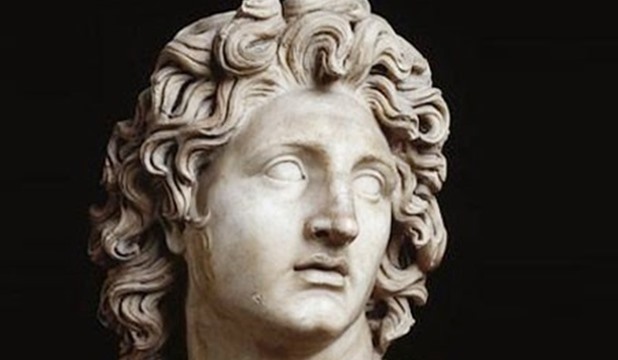
The Greek era in Egypt wasn’t just a conquest; it was a 300-year cultural explosion. In 332 BC,
swept into Egypt, not as a destroyer, but as a liberator from Persian rule. By crowning himself Pharaoh and seeking the blessing of the Oracle of Amun at Siwa, he signaled a new age: the birth of a Greco-Egyptian superpower.
The Ptolemaic Dynasty: A Legacy of Power and Drama
After Alexander’s untimely death, his general
took the throne, launching a dynasty that would rule for three centuries.
The Golden Age: Under the early
Ptolemies
, Egypt became the wealthiest and most sophisticated state in the Mediterranean.
The Decline: Over time, internal revolts and palace intrigues weakened the crown.
The Final Act: The era famously ended with
. Despite her brilliance, the rising power of
eventually absorbed Egypt in 30 BC after the Battle of Actium.
: The "New York City" of Antiquity
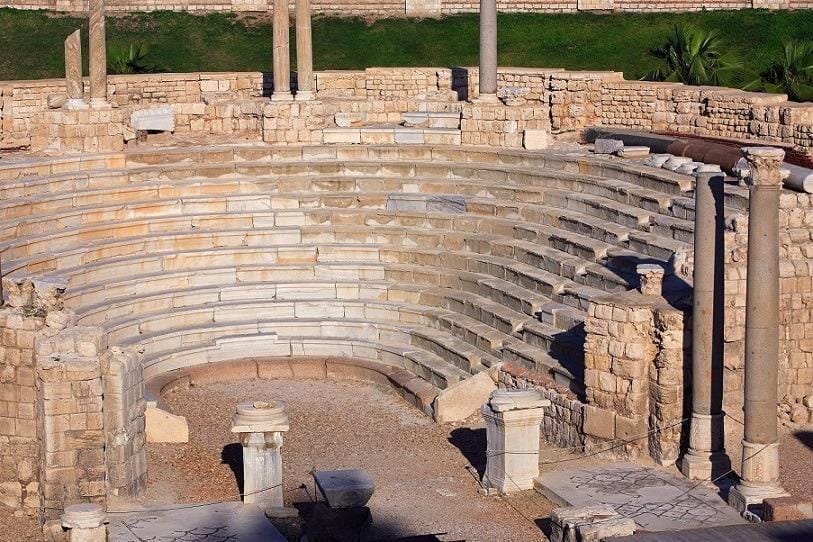
The Ptolemies didn't just rule from Egypt; they transformed
into the intellectual capital of the world.
The Lighthouse (Pharos): A towering achievement of ancient engineering and one of the Seven Wonders of the Ancient World, guiding ships into the Mediterranean’s busiest port.
A Hub of Trade: The city was a melting pot where Greek philosophy met Egyptian mysticism, surrounded by lush royal gardens and marble palaces.
The Intellectual Giants of the University & Library
The
was the first true "world archive," housing over 700,000 papyrus scrolls. Every ship docking in the harbor was searched—not for gold, but for books to be copied.
Scientific Breakthroughs: Scholars at the University (the Mouseion) were centuries ahead of their time. They proved the Earth's rotation and accurately calculated the Earth's circumference.
The Legends:
Religious Fusion: The Ptolemaic Temples
The Greeks knew that to rule Egypt, they had to respect its gods. They didn't replace Egyptian religion; they embraced it.
The Great Temples: Most of the famous temples tourists visit today—
,
, and
Philae
—were actually built or expanded by the Greeks.
Pharaonic Imagery: Ptolemaic kings appeared on temple walls dressed as traditional Pharaohs, offering sacrifices to Horus and Isis, creating a unique "Hellenistic-Egyptian" art style.








Comments
0No comments yet. Be the first to share your thoughts!